3D-printed Game of Life
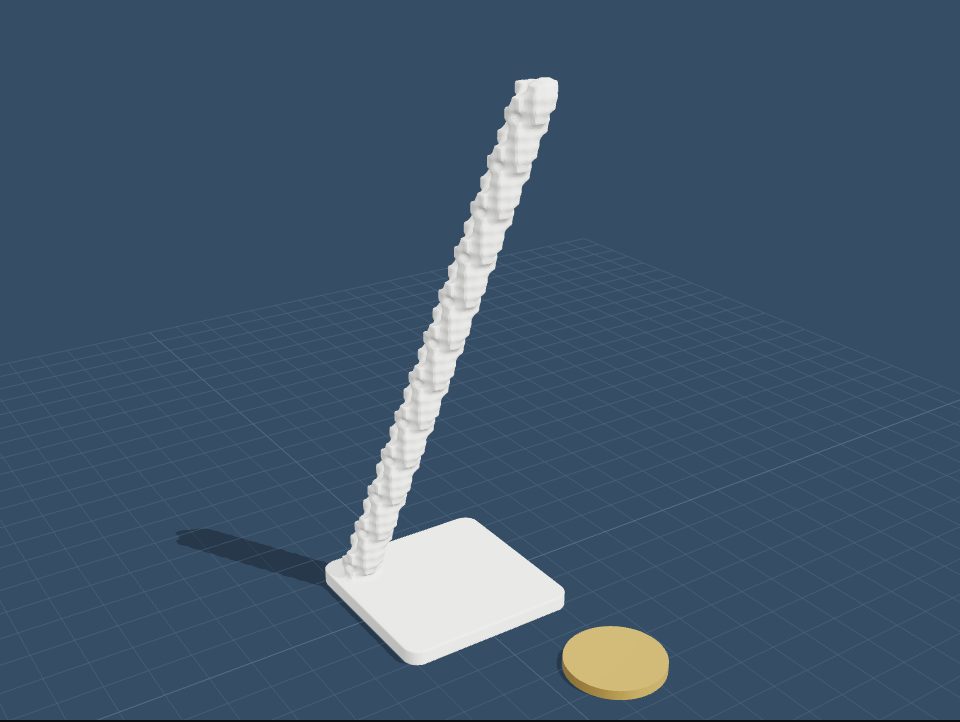
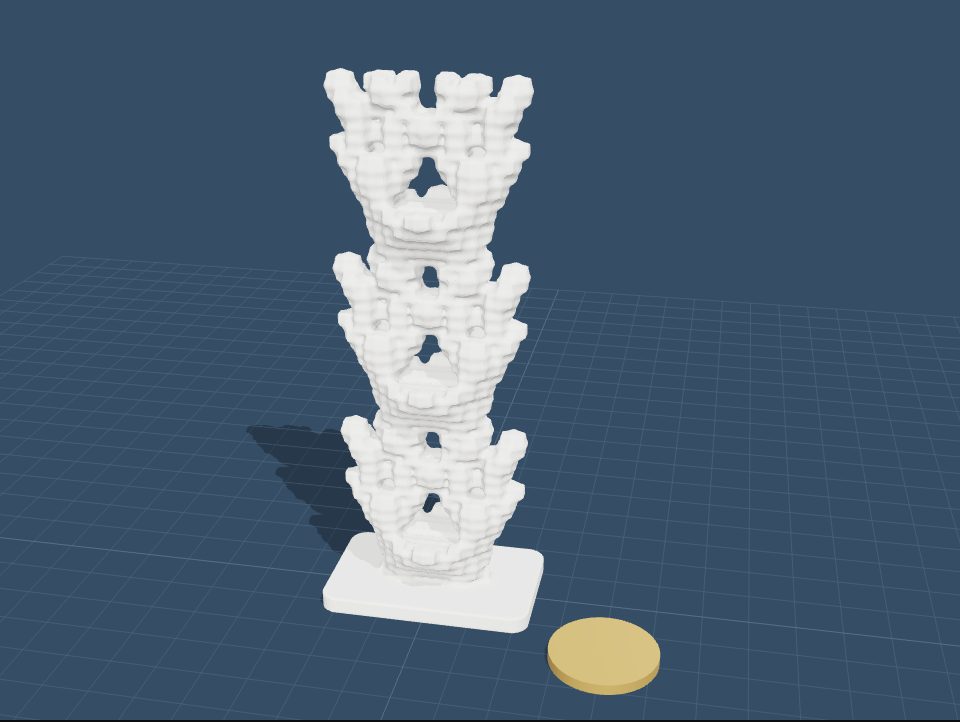
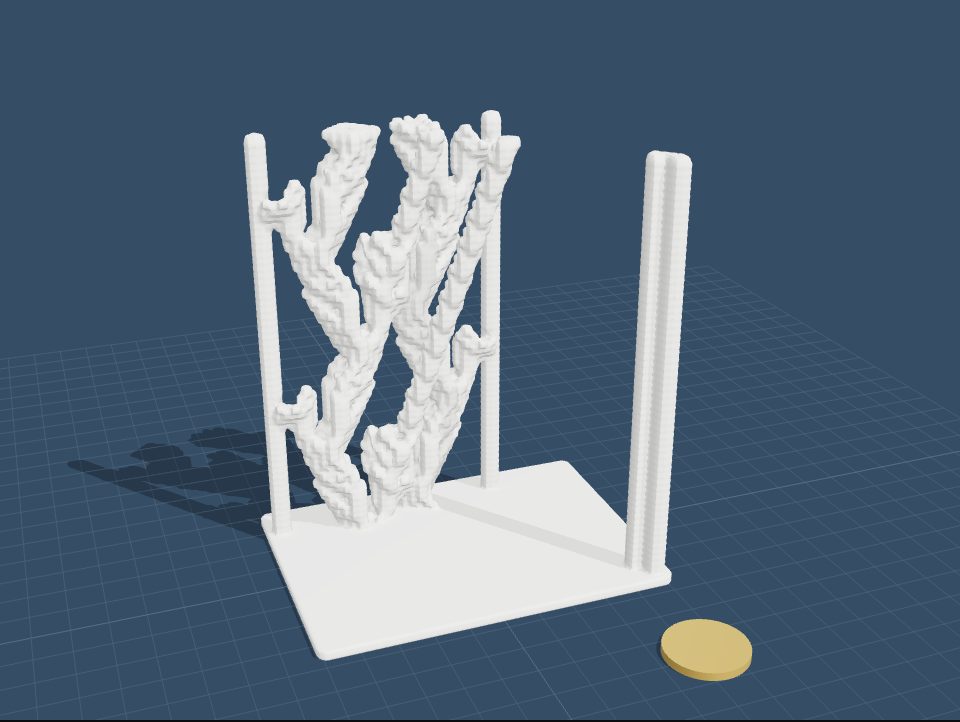
A time sculpture takes a Game of Life pattern and stacks its generations, one layer each, so time runs upward. The glider becomes a staircase, an oscillator a braided column, the Gosper gun a machine of pillars and streams. Worlds can also become skylines, vases, a lampshade, a zoetrope, a doughnut or a keychain. Each one below prints as a single closed piece, and its STL file is free to download.
The sculptures
Sizes are each sculpture's default, with cells large enough that the thinnest joint is at least 1 mm. Pick one to see it turn, then change its size, its generations or its surface before you download it.
-
Time sculptures
Glider
-
 Time sculptures
Pentadecathlon
Time sculptures
Pentadecathlon
-
 Time sculptures
Gosper glider gun
Time sculptures
Gosper glider gun
-
 Time sculptures
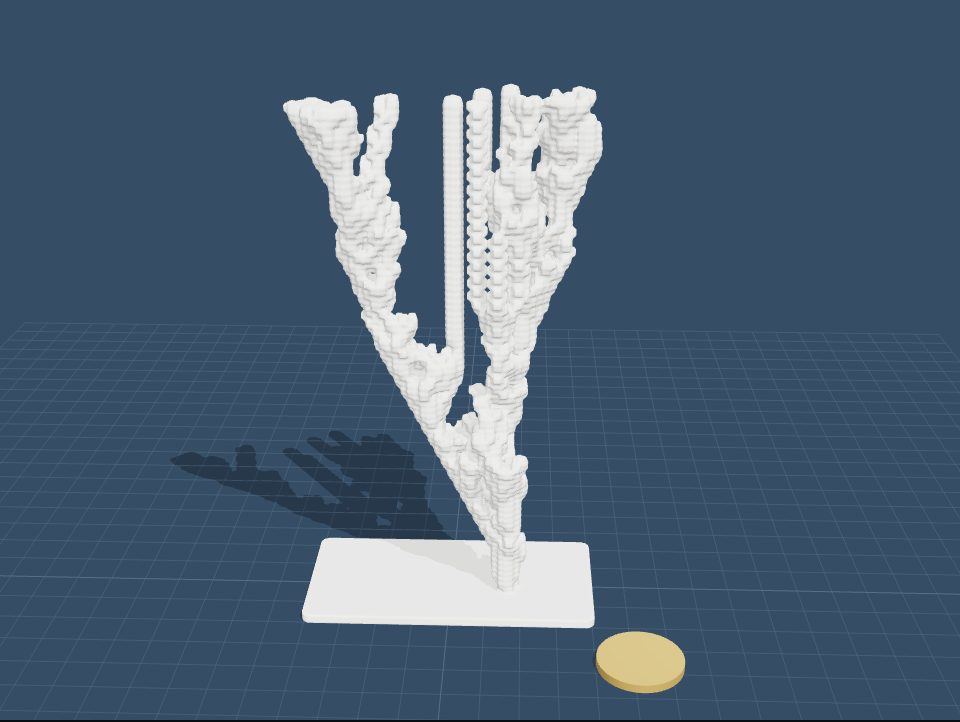
R-pentomino
Time sculptures
R-pentomino
-
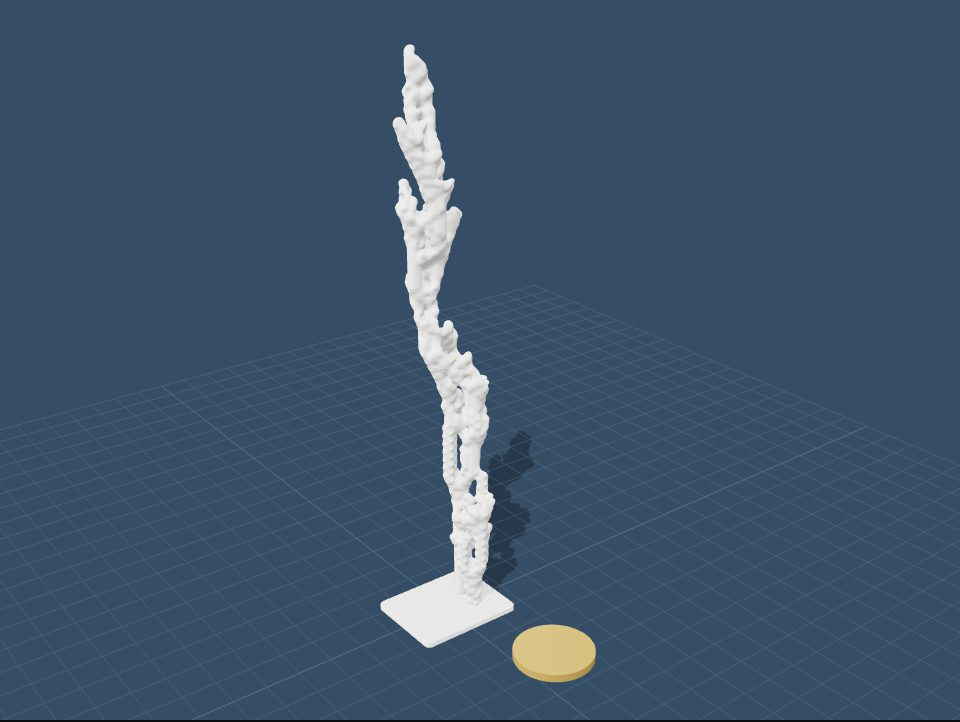 Time sculptures
Diehard
Time sculptures
Diehard
-
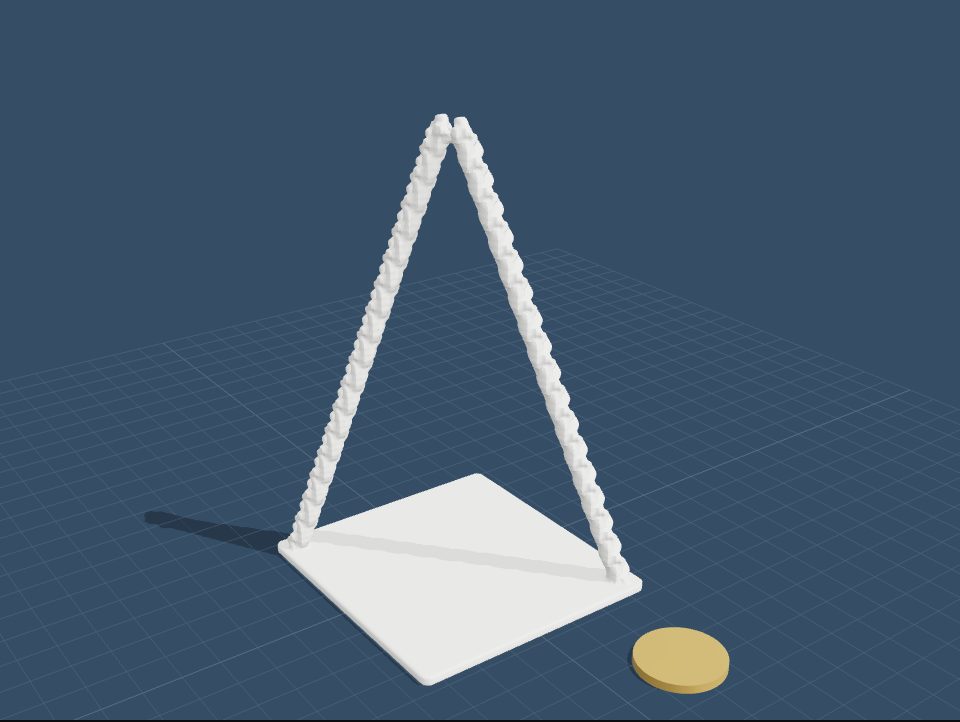 Collisions
Gliders that vanish
Collisions
Gliders that vanish
-
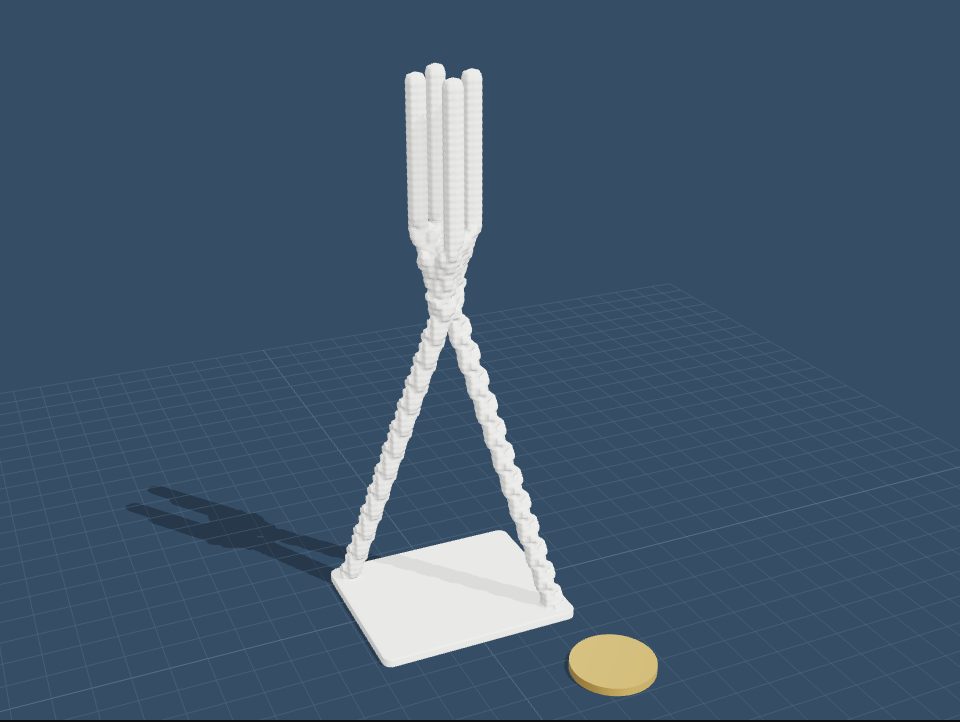 Collisions
Gliders that flare
Collisions
Gliders that flare
-
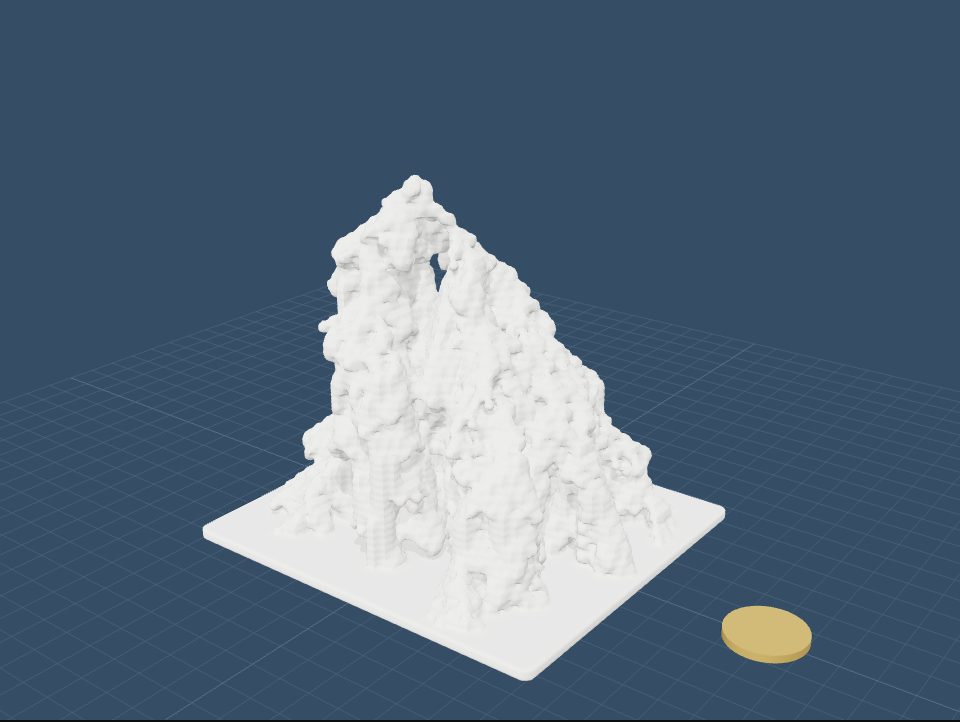 Chaos cone
Chaos cone
Chaos cone
-
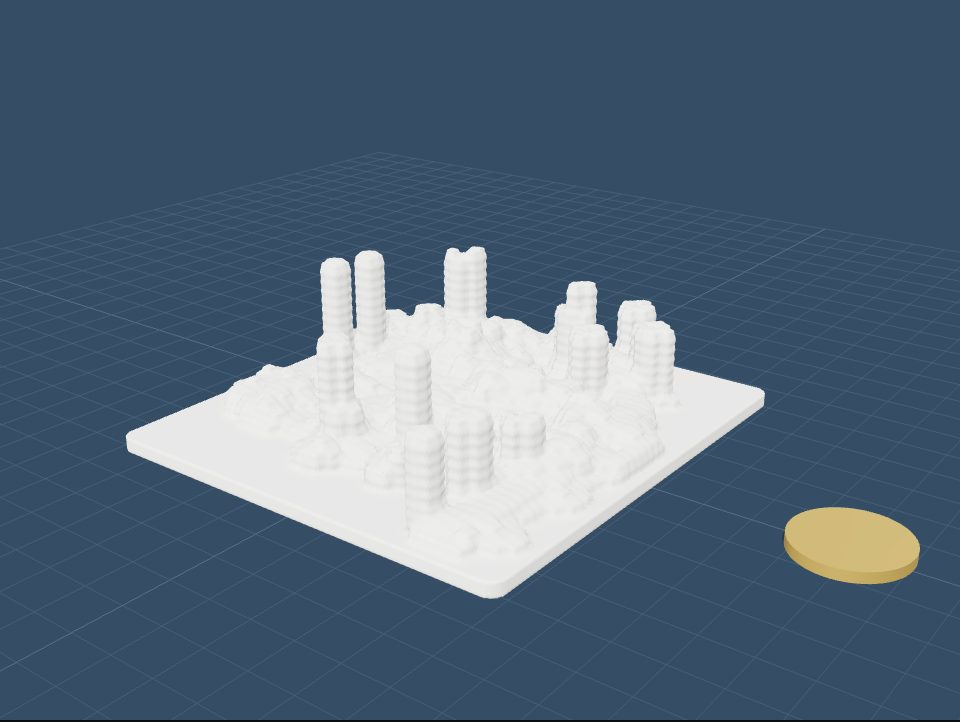 Skylines
Soup skyline
Skylines
Soup skyline
-
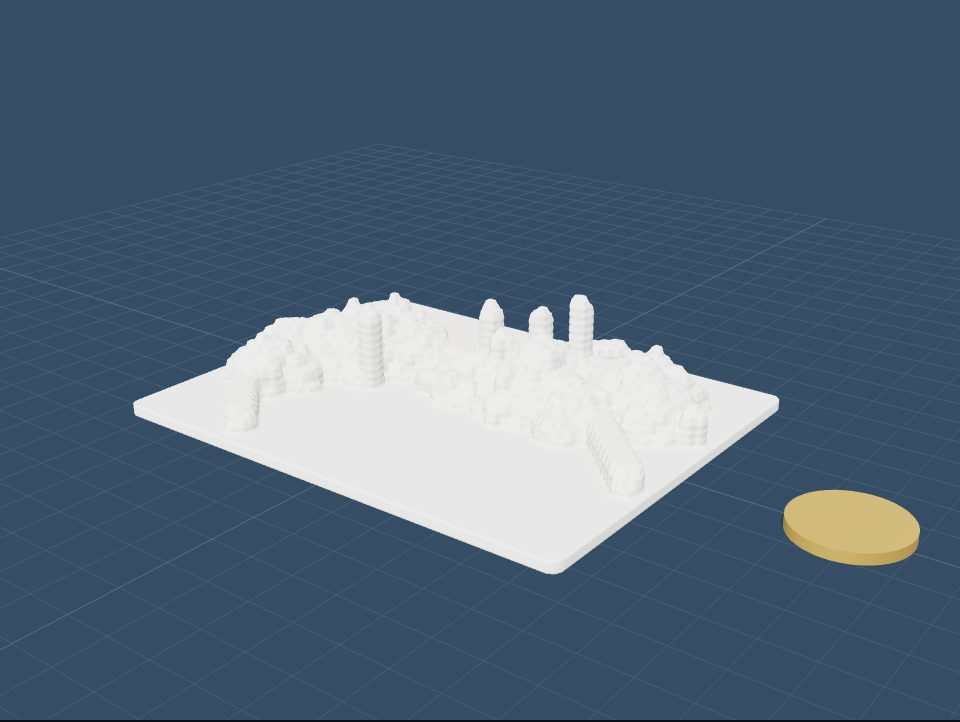 Skylines
R-pentomino skyline
Skylines
R-pentomino skyline
-
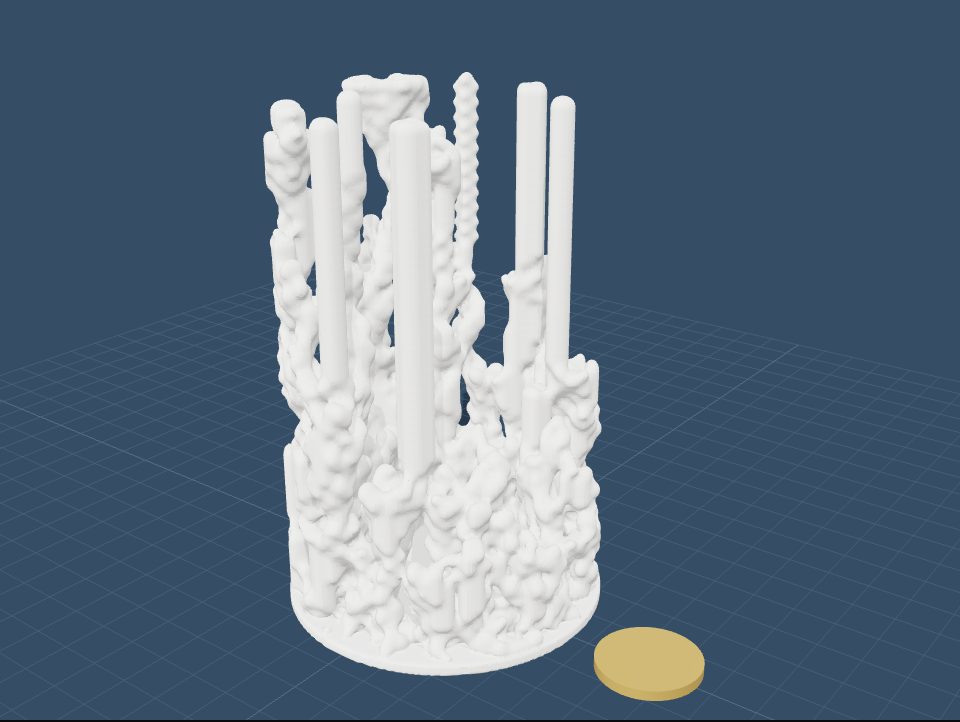 Vases and lampshades
Ring vase
Vases and lampshades
Ring vase
-
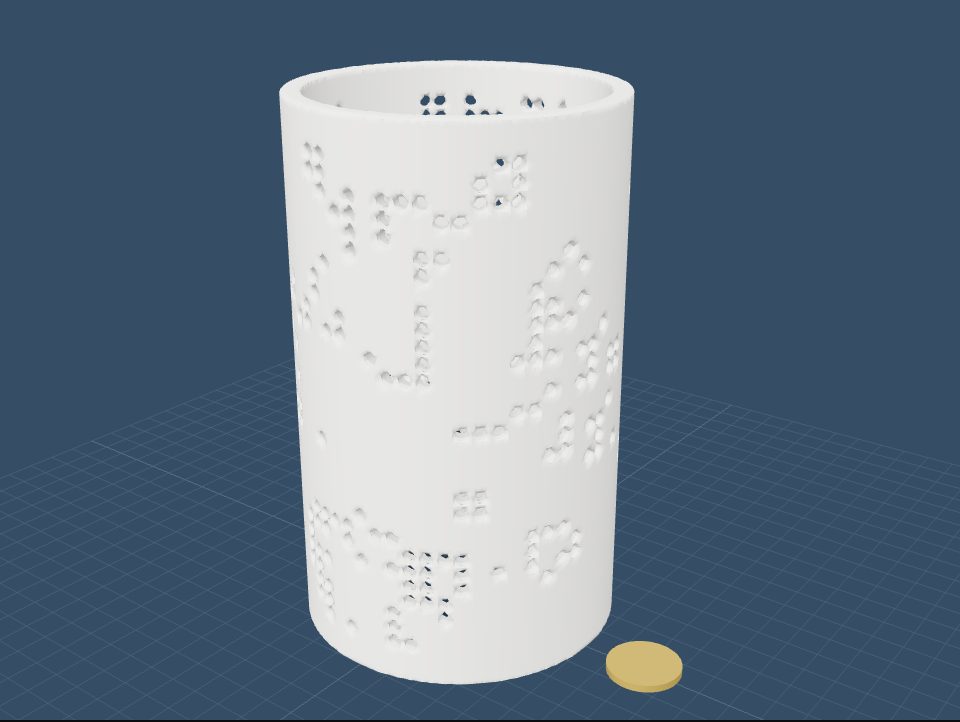 Vases and lampshades
Soup lampshade
Vases and lampshades
Soup lampshade
-
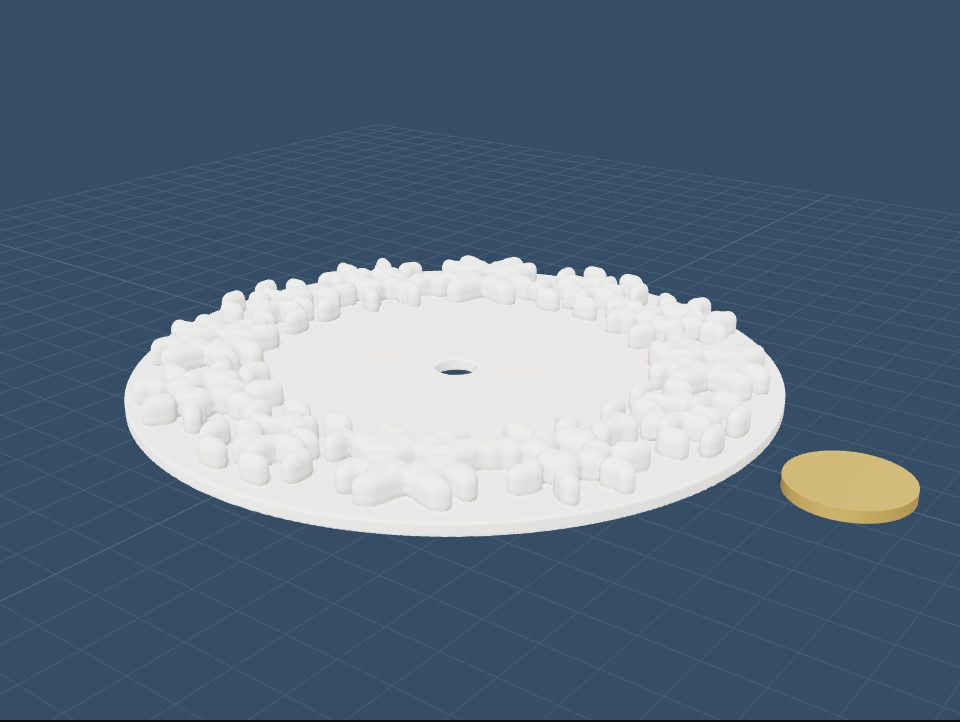 Zoetrope
Pulsar zoetrope
Zoetrope
Pulsar zoetrope
-
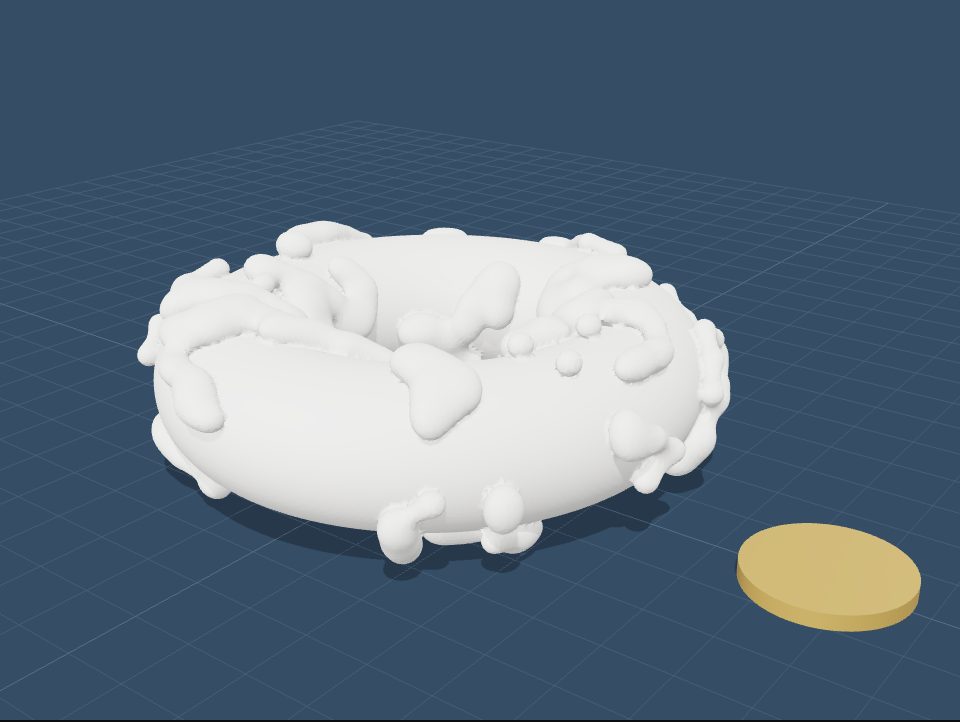 Torus
Soup torus
Torus
Soup torus
-
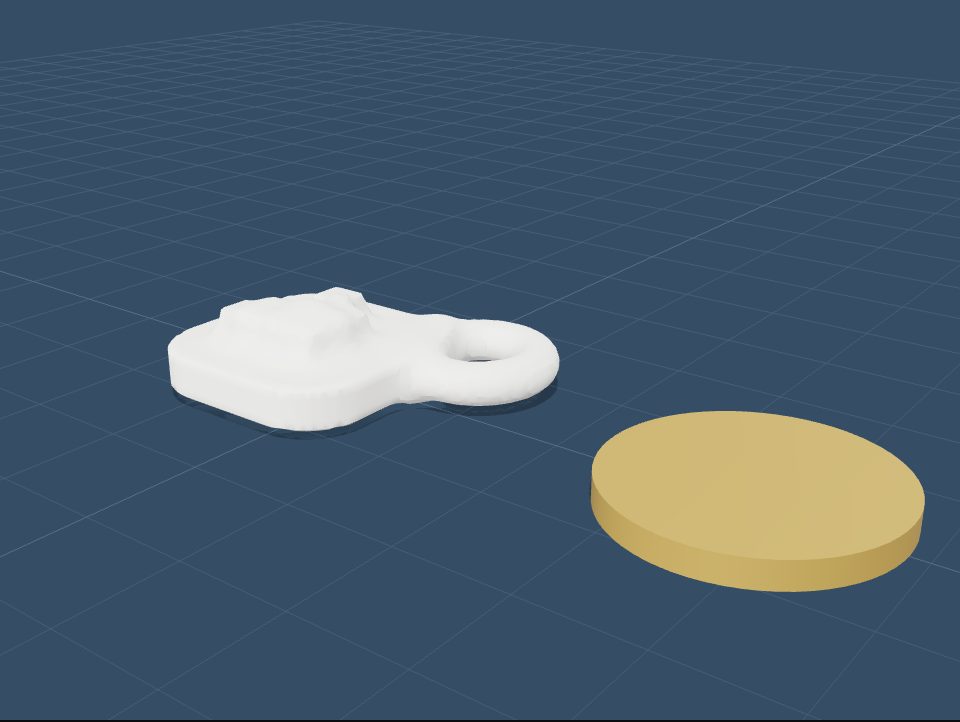 Jewellery
Glider keychain
Jewellery
Glider keychain
How a time sculpture works
Put generation 0 of a 2D pattern on the print bed, generation 1 on top of it, and so on, one layer per generation. A cell that lives on stacks into a column, a pattern that moves leans, and an oscillator repeats its shape every period. 2D mode's Time stack view shows the same thing as the pattern runs.
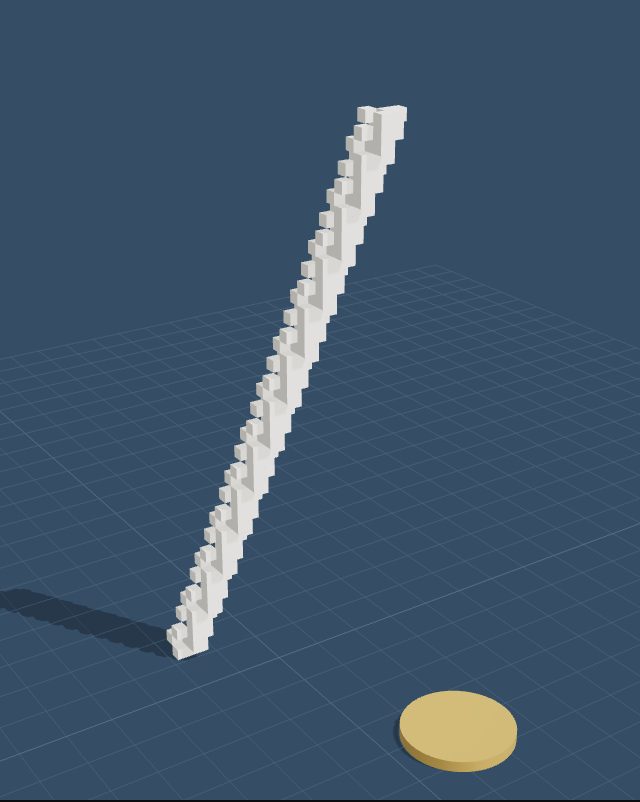
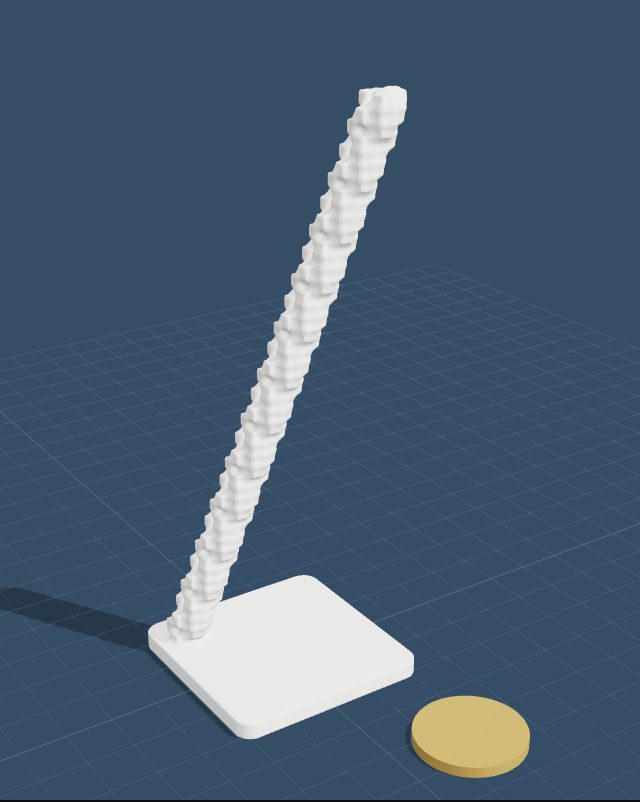
It holds together because of the rules. In Conway's Life a live cell either survived, and sits on itself one layer down, or was born beside three live cells of the generation before. Follow any cell downward and you reach the first generation, which the base plate joins.
What plain cubes lack is thickness. A newborn cell touches its parents only along an edge or at a corner: a line or a point, which no printer can make, so a cube export of the same staircase falls into 49 pieces. Fused rounds the cubes and fills every such joint; Blobs melts the cells into one smooth surface. A joint between two cells that meet only at a corner ends up 0.63 of a cell across in Fused and 0.80 in Blobs.
Pockets sealed inside a model are filled in, so no powder or resin is trapped in a print.
Printing one
- Size. The cell size scales everything. The defaults keep the thinnest joint at 1 mm or more; below that the viewer marks the model fragile.
- Filament (FDM). A time sculpture stands on its base plate and grows upward, and a newborn cell steps out by one cell per layer, a 45° staircase. Check your slicer's overhang preview and add supports where it asks for them. The torus has a round underside: print it with supports.
- Colour. With 4 colour bands the colour changes with height, so a printer with one nozzle can print it: pause and swap filament at the heights the viewer lists. Most slicers can insert a colour change at a layer.
- Nylon powder (SLS, MJF). The powder holds up every overhang, so nothing needs supports.
- Resin. Needs supports.
- No printer? Upload the STL to an online print service, pick a material and see the price before you order. Material, in cm³ in the viewer, is what most services charge for.
From the app
Every sculpture here runs Conway's Game of Life (B3/S23). The glider, pentadecathlon, Gosper gun, R-pentomino and diehard are presets in the app's 2D mode: open one there and its Time stack view grows the same sculpture as it runs. The app's own 3D print (.stl) export, in the Capture menu, is a member feature: it writes a 3D world as plain cubes, with an optional base plate. It does not make time sculptures or these surfaces yet.